
In recent years we've heard a lot about so-called "ferments," and people even talk about certain beneficial properties from consuming them regularly.
But what really are ferments, and what are the benefits of drinking them?
Well, there are several types of fermentation — from the one that happens in your cells when you go for a run and need to cover the moments your muscles lack oxygen, to the one that started life on our planet millions of years ago.
Okay, that's just a theory, but they say fermentation is older than your grandma's underwear. Let's get serious: "lactic-acid fermentation" and "yeast fermentation" are the most popular, and they're in our everyday products — or they should be.
Lactic-acid fermentation happens in products like yogurt, cheese, the famous Yakult your mom packed for kindergarten, and other super-nutritious drinks like kefir.
And yeast fermentation is very popular for creating alcoholic drinks like beer, wine, and tequila… but there are also products made through yeast fermentation that don't result in alcohol, like bread, kombucha, and kvass.
Now, without getting too scientific, here's how the magic of fermentation happens.
First, "yeast fermentation": yeast is a fungus and, like every living organism, it breathes — but the difference is that yeast breathes anaerobically, meaning without oxygen.
But how does it breathe? What does it use if it doesn't use oxygen like we do? When yeast breathes, it uses glucose as a source of energy, and in the process of obtaining and generating that energy, the byproduct is carbon dioxide, ethanol, and more energy.
It will then need more energy to grow — remember, it's a living organism.
A very clear example is when we make bread; among the main ingredients for a fluffy loaf is a little yeast and a little sugar. The yeast eats all that sugar and produces carbon dioxide.
This is its breathing or fermentation process, and all those carbon-dioxide bubbles are what make the dough rise so that, after baking, we get a fluffy, delicious loaf.
Now, "lactic-acid fermentation" is very, very similar, except the lead actor here is a bacterium called Lactobacillus acidophilus, and the fermentation process happens much like yeast's.
The difference is that after consuming the glucose, the bacterium generates lactic acid as a byproduct. This lactic acid is responsible for the slightly sour taste in your lacto-fermented products, and for the probiotics and enzymes in them.
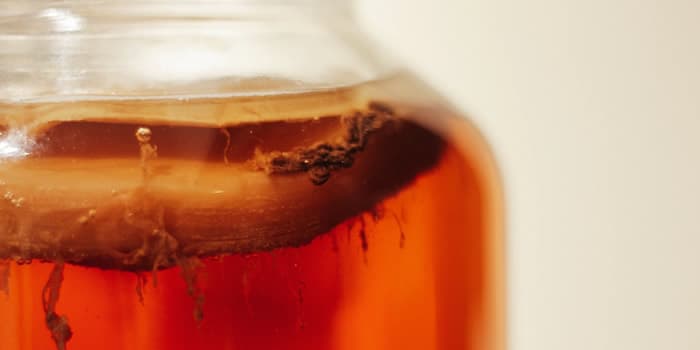
Kombucha is a drink that has both types of fermentation, and the SCOBY used in making kombucha is a lovely example of a community of bacteria and yeast that have decided to live together and evolve in balance. That's why it's rich in probiotics, vitamins, and enzymes, while being bubbly and delicious at the same time.
I know it might sound a little "ewww" to talk about fungi and bacteria, but the truth is we owe them love and respect, like every living organism that shares its wellbeing with us.
So now you know a little more about fermentation, and the next time you go to drink yogurt, kefir, or an ice-cold kombucha, remember the process they went through to get that delicious taste and their benefits!
Thanks for reading! May you be happy, may you be healthy, and may you be blessed.